The Hidden Customer Support Signals That Predict Churn Before It Happens
The Hidden Customer Support Signals That Predict Churn Before It Happens
Most businesses only realize they have a customer retention problem after it's too late.
Customers stop engaging.
Support conversations become less frequent.
Renewals decline.
Revenue starts dropping.
By the time traditional metrics like customer satisfaction scores or churn reports show a problem, the customer has often already decided to leave.
The good news is that customers usually give warning signs long before they churn. The challenge is knowing where to look.
Many of these signals appear in your customer support conversations, website chats, and WhatsApp interactions weeks before revenue is affected.
Let's explore the support metrics that can help businesses identify at-risk customers early.
Why Traditional Metrics Don't Tell the Full Story
Metrics like CSAT, NPS, and churn rate are useful, but they are lagging indicators.
They tell you what has already happened.
What businesses really need are leading indicators—signals that reveal customer frustration before it becomes a cancellation.
Customers rarely leave because of a single bad experience. More often, they leave because of ongoing confusion, unanswered questions, delayed responses, or poor onboarding experiences.
That's why support data can be one of the most valuable sources of customer insights.
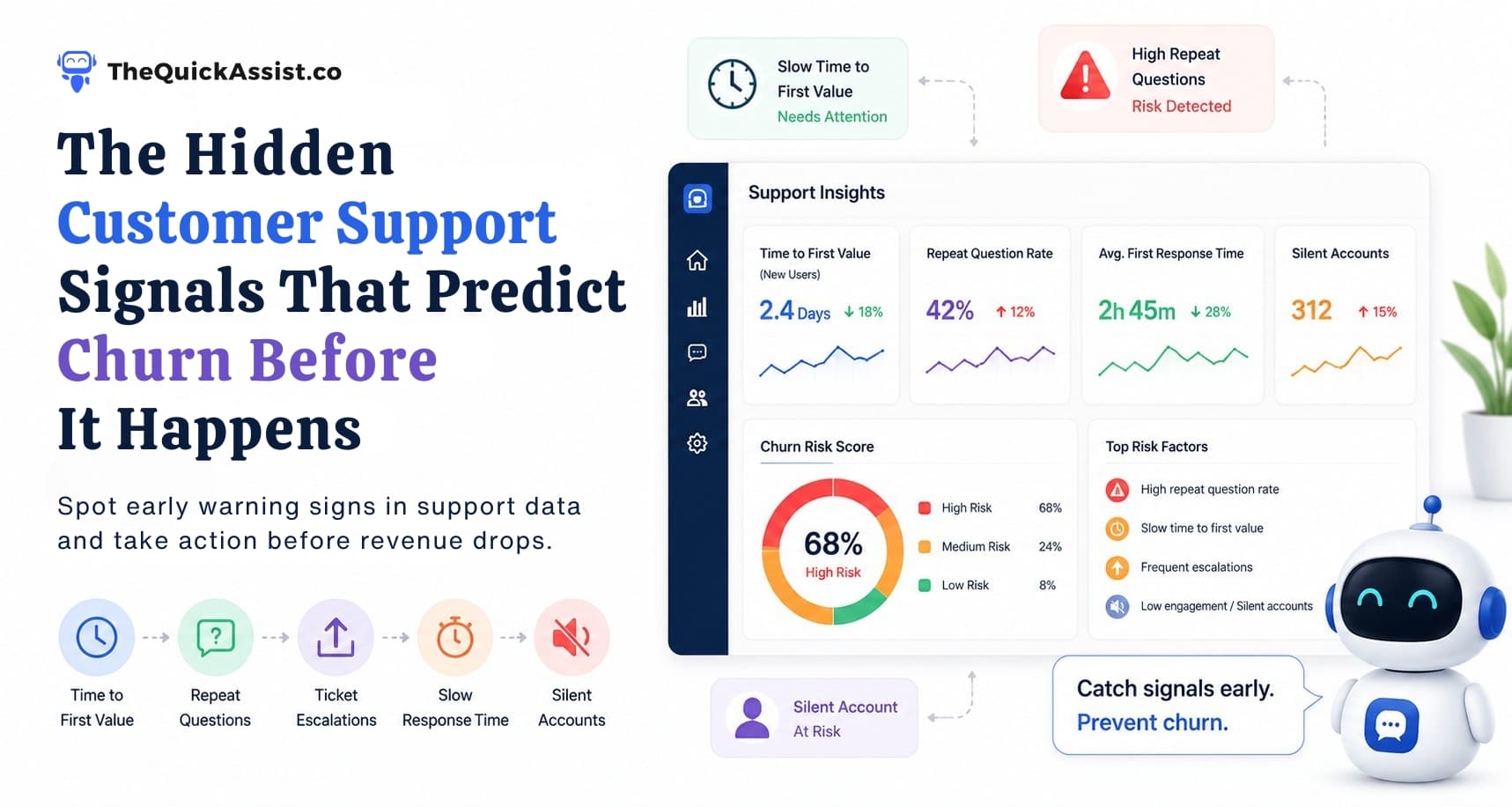
1. Time to First Value (TTFV)
One of the strongest predictors of customer success is how quickly users experience value from your product or service.
For example:
- How long does it take a customer to complete setup?
- How quickly do they generate their first lead?
- When do they achieve their first meaningful result?
If customers spend too much time asking basic setup questions, they may never fully adopt the product.
Reducing confusion during onboarding helps customers reach their "aha moment" faster and increases the chances they'll stay long-term.
2. Repeat Questions from Multiple Customers
When support teams keep receiving the same questions, it's often a sign that something isn't clear.
Common examples include:
- "How do I get started?"
- "Where can I find this feature?"
- "Why isn't this working?"
Instead of treating these as isolated support requests, businesses should view them as product improvement opportunities.
Repeated questions often reveal gaps in onboarding, documentation, or user experience.
Fixing these issues can significantly improve customer satisfaction and reduce support workload.
3. Frequent Ticket Escalations
Support teams are designed to solve customer issues quickly.
However, when tickets frequently need to be escalated to technical teams or managers, it may indicate deeper problems.
High escalation rates can suggest:
- Product complexity
- Technical issues
- Poor user experience
- Missing support resources
Customers notice when simple problems require multiple handoffs, and it can reduce trust in your product.
Tracking escalation trends can help businesses identify friction points before they affect customer retention.
4. Slow Response Times for New Customers
The first few days after a customer signs up are critical.
During this period, customers are actively learning, exploring, and deciding whether your solution meets their expectations.
A delayed response during onboarding can create frustration and reduce engagement.
Instead of focusing only on overall response times, businesses should closely monitor response times for new customers.
Fast support during onboarding often leads to higher activation and better long-term retention.
5. Silent Customers
Many businesses focus on customers who submit lots of support requests.
But sometimes the biggest risk comes from customers who say nothing at all.
Silent customers may:
- Rarely log in
- Stop using key features
- Avoid contacting support
- Show declining engagement
These users are often struggling quietly and may leave without providing feedback.
Proactive outreach can help uncover issues before they result in churn.
How AI Can Help Identify These Signals Earlier
As businesses grow, manually tracking customer behavior becomes difficult.
AI-powered customer support tools can help by automatically analyzing conversations across websites, WhatsApp, and support channels.
They can identify patterns such as:
- Repeated customer questions
- Delayed responses
- Onboarding challenges
- Low engagement accounts
- Customers at risk of churn
This allows support and customer success teams to take action before problems become serious.
The Future of Customer Support Is Proactive
Customer support is no longer just about answering questions.
It plays a critical role in customer retention and business growth.
The most successful companies don't wait for churn reports to tell them something is wrong. They identify early warning signs, remove friction, and support customers before frustration builds.
By paying attention to support conversations and customer engagement patterns, businesses can improve customer satisfaction, increase retention, and reduce revenue loss.
Because the best way to reduce churn isn't reacting faster.
It's spotting the warning signs before customers decide to leave.