Who Needs WhatsApp Business API? Understanding the 3 Types of WhatsApp for Business
Who Needs WhatsApp Business API? Understanding the 3 Types of WhatsApp for Business
Learn the differences between Personal WhatsApp, WhatsApp Business App, and WhatsApp Business API. Discover which one fits your business, common myths, and when it's time to upgrade.
Stop wondering whether your business actually needs WhatsApp API.
Many businesses hear terms like WhatsApp Business, WhatsApp Business Premium, and WhatsApp Business API and assume they're all the same. Others believe WhatsApp API is only for large enterprises with thousands of customers.
The reality is much simpler.
Choosing the wrong version of WhatsApp can limit your team's productivity, delay customer responses, and even cost you sales. In this guide, we'll explain the three types of WhatsApp for business, compare their differences, bust common myths, and help you decide which one fits your business.
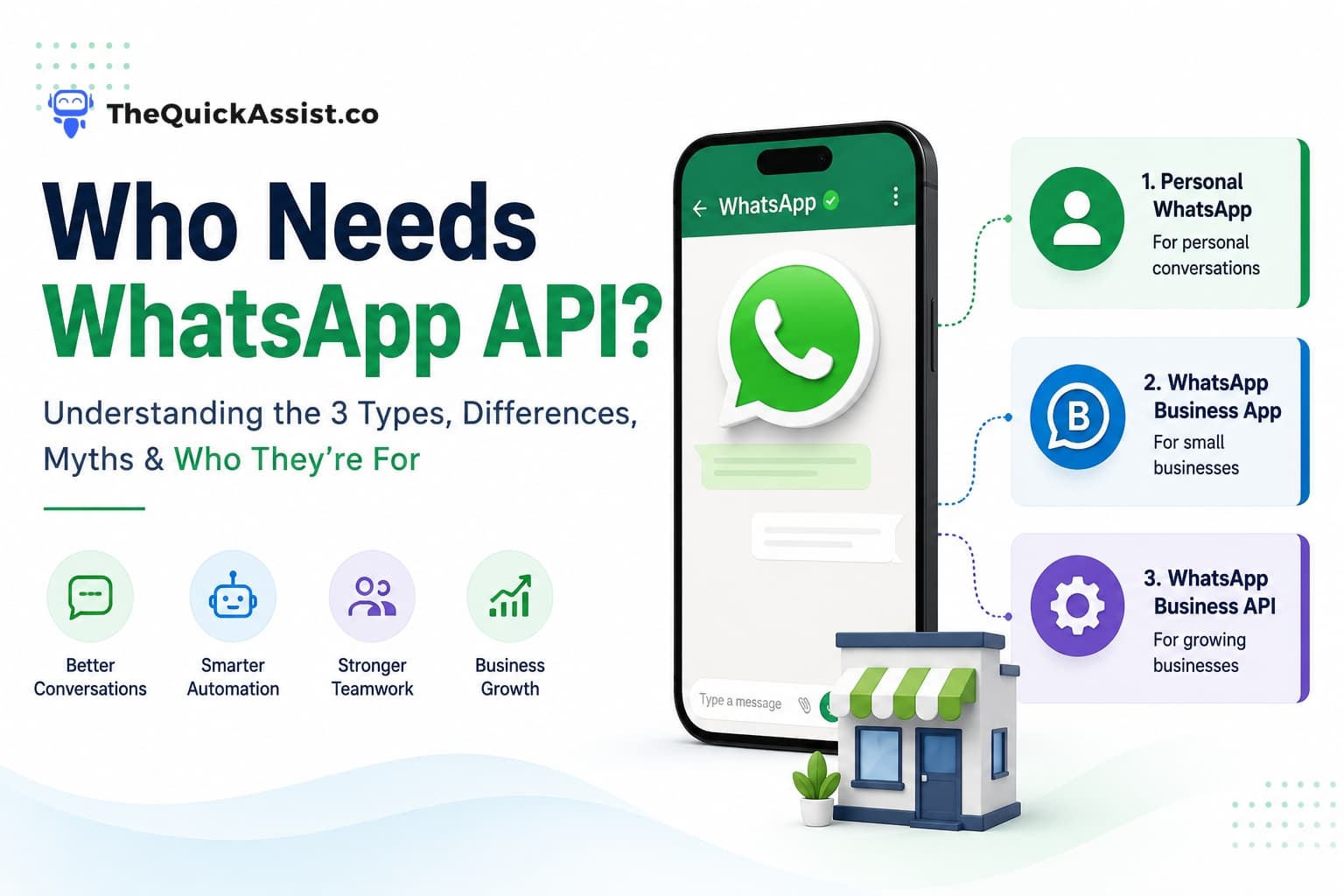
The Three Types of WhatsApp for Business
1. Personal WhatsApp
This is the regular WhatsApp that most people use every day.
It is designed for personal conversations between friends and family.
Best for:
- Individuals
- Freelancers with very few clients
- Personal communication
Limitations:
- No business profile
- No automation
- No analytics
- No team collaboration
- Difficult to manage customer conversations
If customers are contacting your business through a personal WhatsApp number, you're already limiting your growth.
2. WhatsApp Business App
This is the free app created specifically for small businesses.
It includes several useful features that make customer communication more professional.
Features include:
- Business profile
- Product catalog
- Quick replies
- Greeting messages
- Away messages
- Labels for organizing chats
Best for:
- Small businesses
- Local stores
- Home businesses
- Businesses receiving fewer than 100 conversations daily
While it's a great upgrade from personal WhatsApp, it still has limitations.
Limitations:
- Limited collaboration
- No advanced automation
- No AI chatbot
- No CRM integration
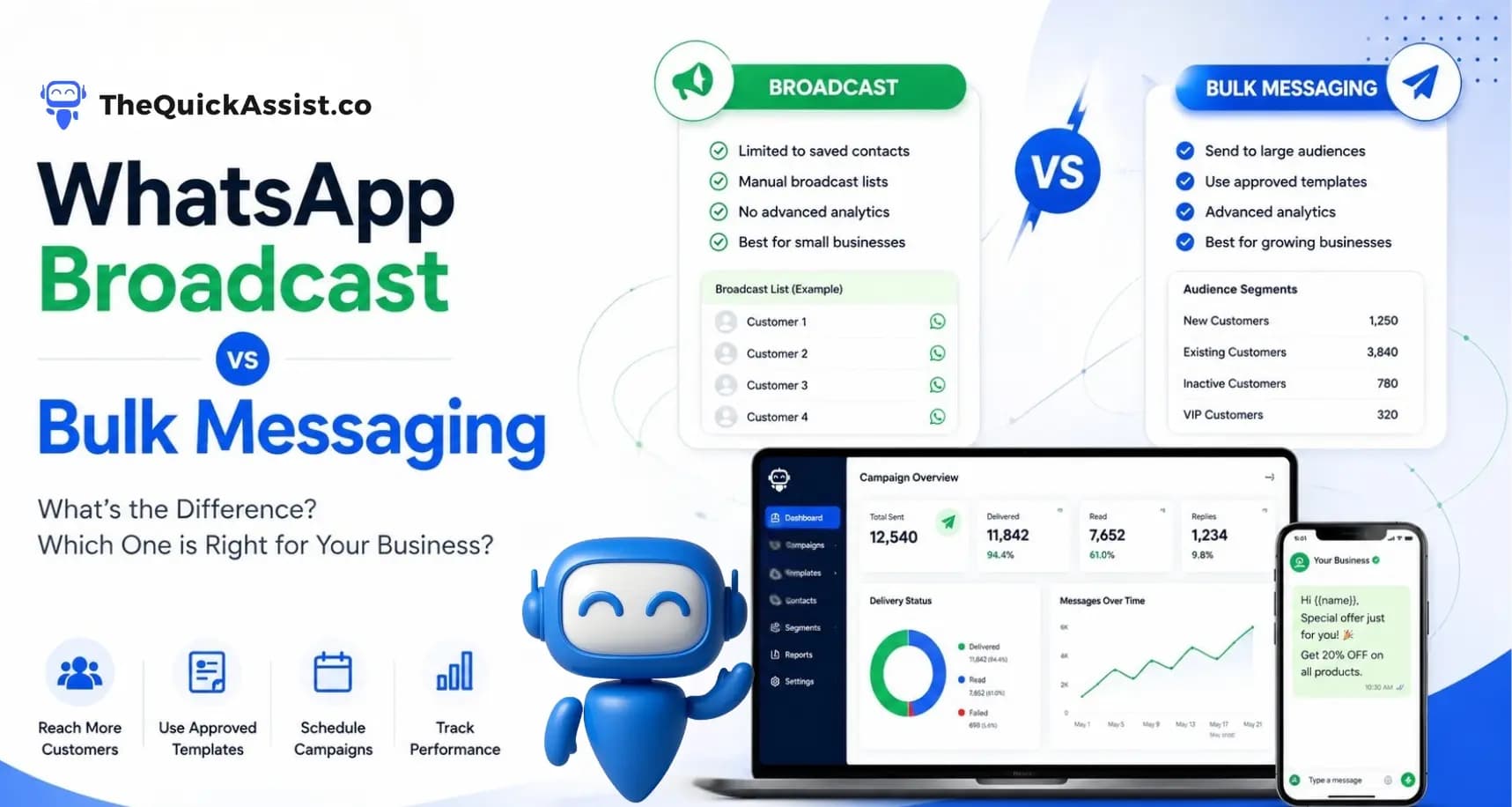
- No bulk campaign management
- Difficult to manage growing customer support
3. WhatsApp Business API
This is the most powerful version of WhatsApp designed for growing businesses.
Unlike the Business App, the API doesn't have its own interface. Instead, it connects with platforms like TheQuickAssist, allowing businesses to automate conversations, manage teams, and scale customer support.
Features include:
- Multiple team members using one WhatsApp number
- AI-powered customer support
- Shared Team Inbox
- Automated replies
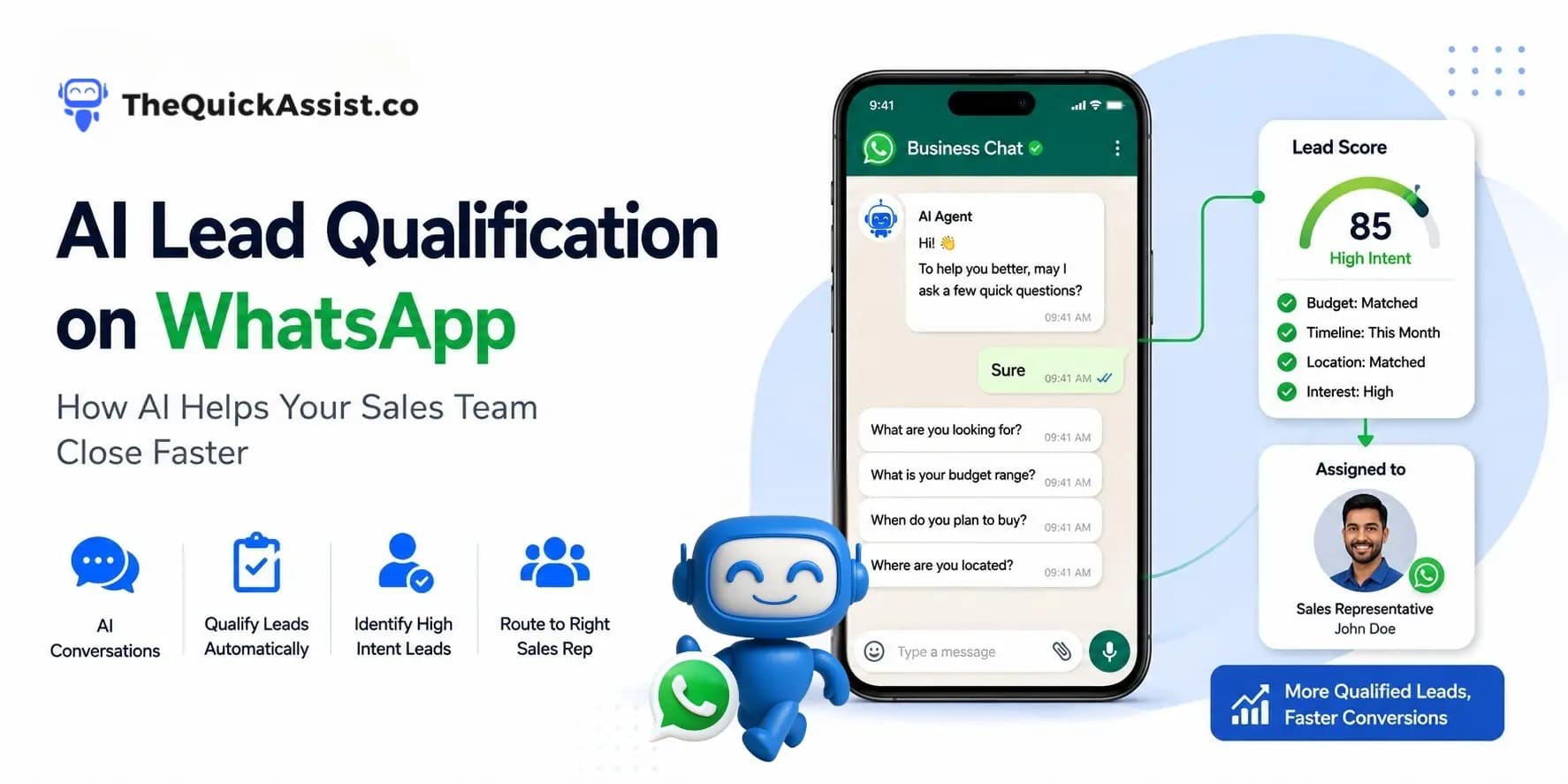
- Lead qualification
- CRM integration
- Bulk messaging using approved templates
- Workflow automation
- Customer segmentation
- Analytics and reporting
- Appointment reminders
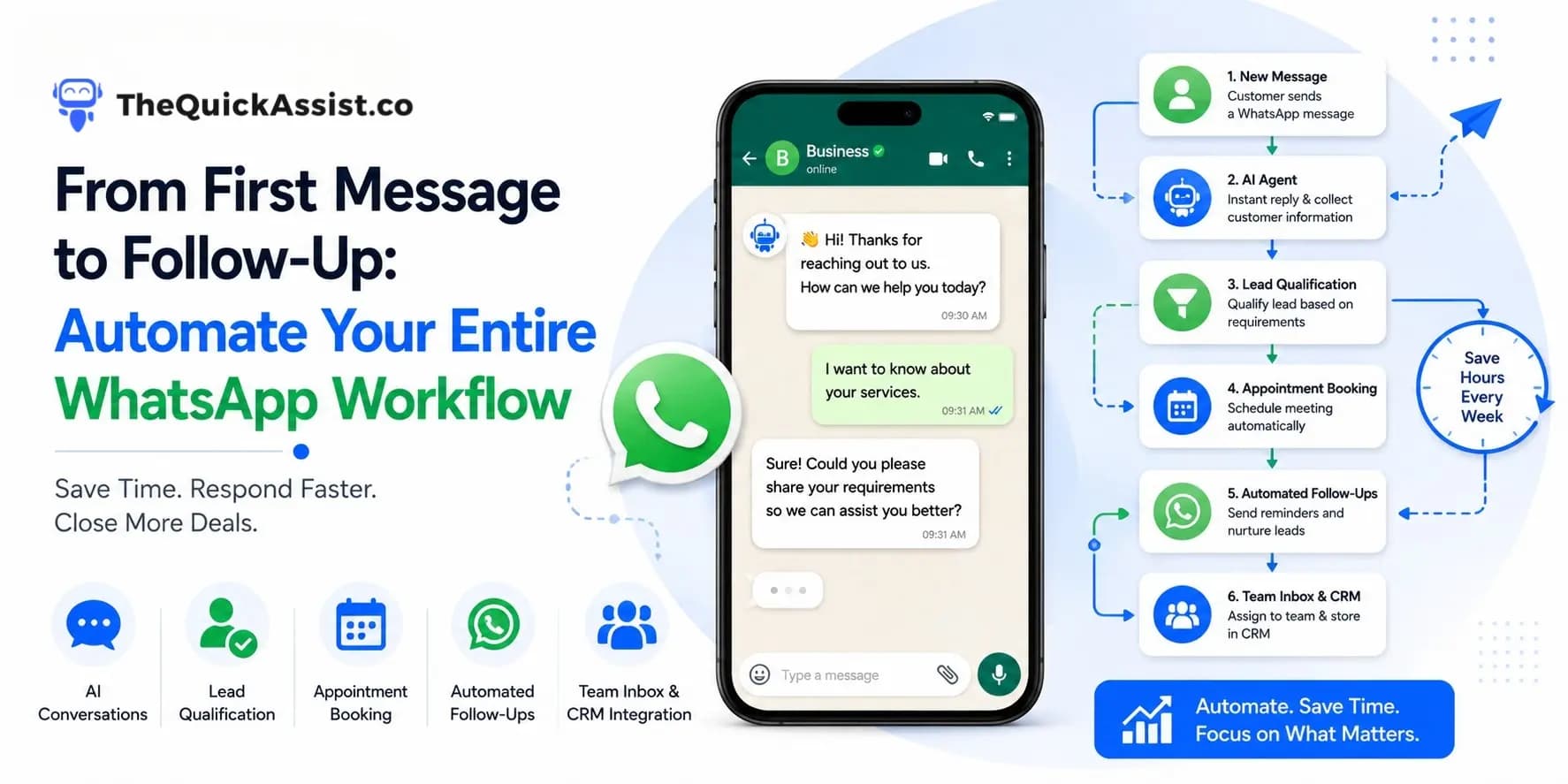
- Automated follow-ups
Instead of manually replying to every customer, businesses can automate repetitive conversations while still providing a personalized experience.
Which Businesses Actually Need WhatsApp API?
You receive hundreds of WhatsApp messages every week
Manual replies become impossible. Customers wait longer, leads go cold, and sales opportunities are missed.
Your team shares one WhatsApp number
A Shared Team Inbox eliminates confusion by allowing multiple agents to manage conversations together.
You lose leads because replies are delayed
Businesses that respond faster are significantly more likely to convert leads into customers.
You manually send follow-ups
Automated reminders for appointments, payments, quotes, and updates save hours of manual work.
You want AI to answer common questions
An AI Agent can instantly answer frequently asked questions while your team focuses on more valuable conversations.
Businesses That Benefit the Most
- Real Estate Agencies
- Healthcare Clinics
- Educational Institutes
- Salons & Spas
- Automotive Dealerships
- E-commerce Brands
- Marketing Agencies
- Travel Companies
- Restaurants
- Service Businesses
- Financial Consultants
Common Myths About WhatsApp Business API
Myth 1: WhatsApp API is only for large companies.
Reality: Startups and small businesses also use WhatsApp API to automate customer communication.
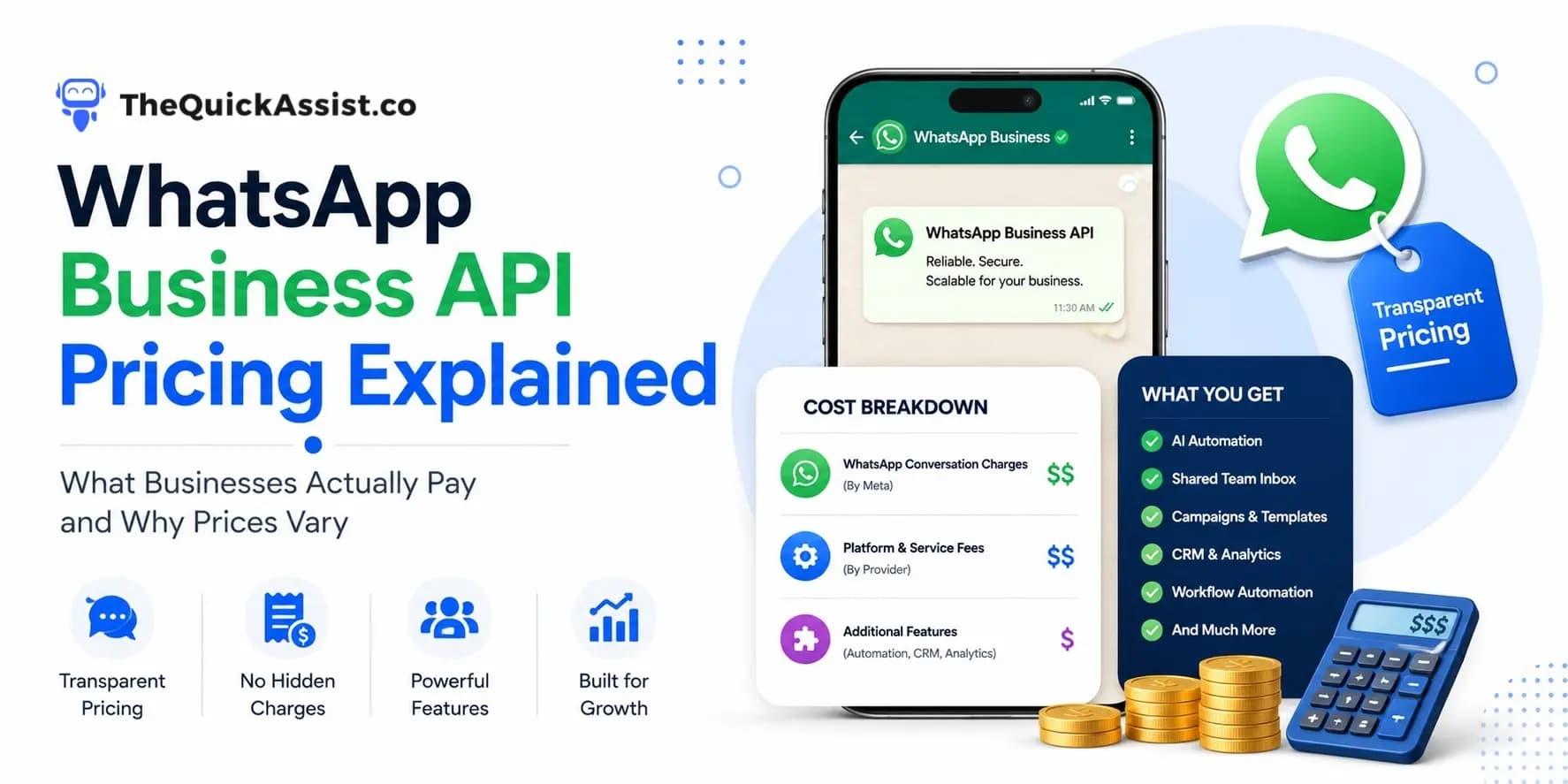
Myth 2: It's too expensive.
Reality: Automation often costs much less than hiring additional support staff while working 24/7.
Myth 3: Customers will know they're talking to a bot.
Reality: Modern AI Agents provide natural conversations and can hand chats over to human agents whenever needed.
Myth 4: Bulk messaging is spam.
Reality: WhatsApp API only allows approved template messages sent to customers who have opted in.
Myth 5: Setting up WhatsApp API is difficult.
Reality: Platforms like TheQuickAssist make setup simple without requiring technical expertise.
Should You Upgrade?
You probably don't need WhatsApp API if:
- You're a solo user.
- You receive only a few messages daily.
- You don't need automation.
- Manual communication still works well.
You should consider WhatsApp API if:
- Your team manages customer chats.
- You receive many inquiries every day.
- You want AI-powered replies.
- You need automated follow-ups.
- You run WhatsApp marketing campaigns.
- You use a CRM.
- You want faster response times.
Final Thoughts
WhatsApp has evolved from a messaging app into one of the most powerful customer communication channels for businesses.
The right solution depends on your business size and goals. Personal WhatsApp works for individuals, the Business App suits small businesses, and WhatsApp Business API helps businesses scale with automation, AI, and team collaboration.
Ready to See WhatsApp Business API in Action?
Book your free demo today and discover how TheQuickAssist can automate replies, manage your team, capture leads, and help grow your business.
Over to You
What's the biggest challenge you currently face while managing customer conversations on WhatsApp?