Blog
Do You Really Need AI for Customer Support?
A Practical Guide for Growing Businesses
Dec 19, 2025
A Practical Guide for Growing Businesses
Customer support is under pressure for most growing businesses.
As customer bases expand, ticket volumes rise. Response times slow down. Support teams feel stretched, even when they’re working harder than ever. At some point, leaders start hearing the same suggestion everywhere:
“You should add AI to customer support.”
But is AI actually necessary for your business right now? And if it is, what does adopting it really involve?
This guide breaks it down clearly. We’ll examine when traditional support starts to fail, the key signals that indicate it’s time for AI, what effective AI support should deliver, and how QuickAssist helps businesses make a smooth transition—without disrupting their teams or customers.
When Traditional Support Starts Falling Short
Even the strongest support teams have limits.
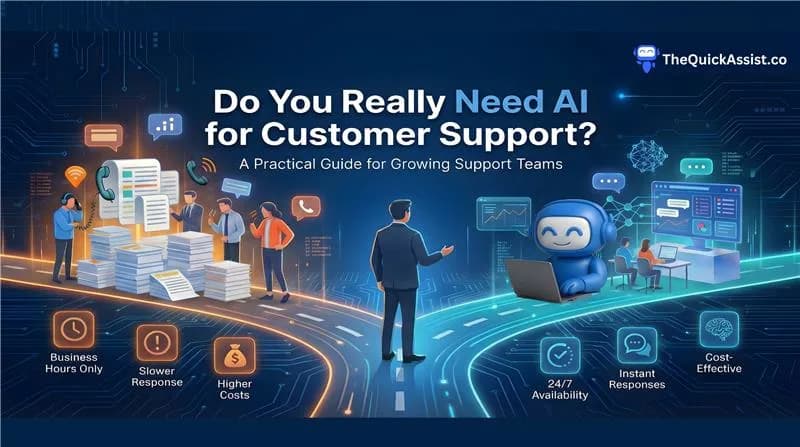
As businesses grow, support models that once worked well begin to crack under pressure:
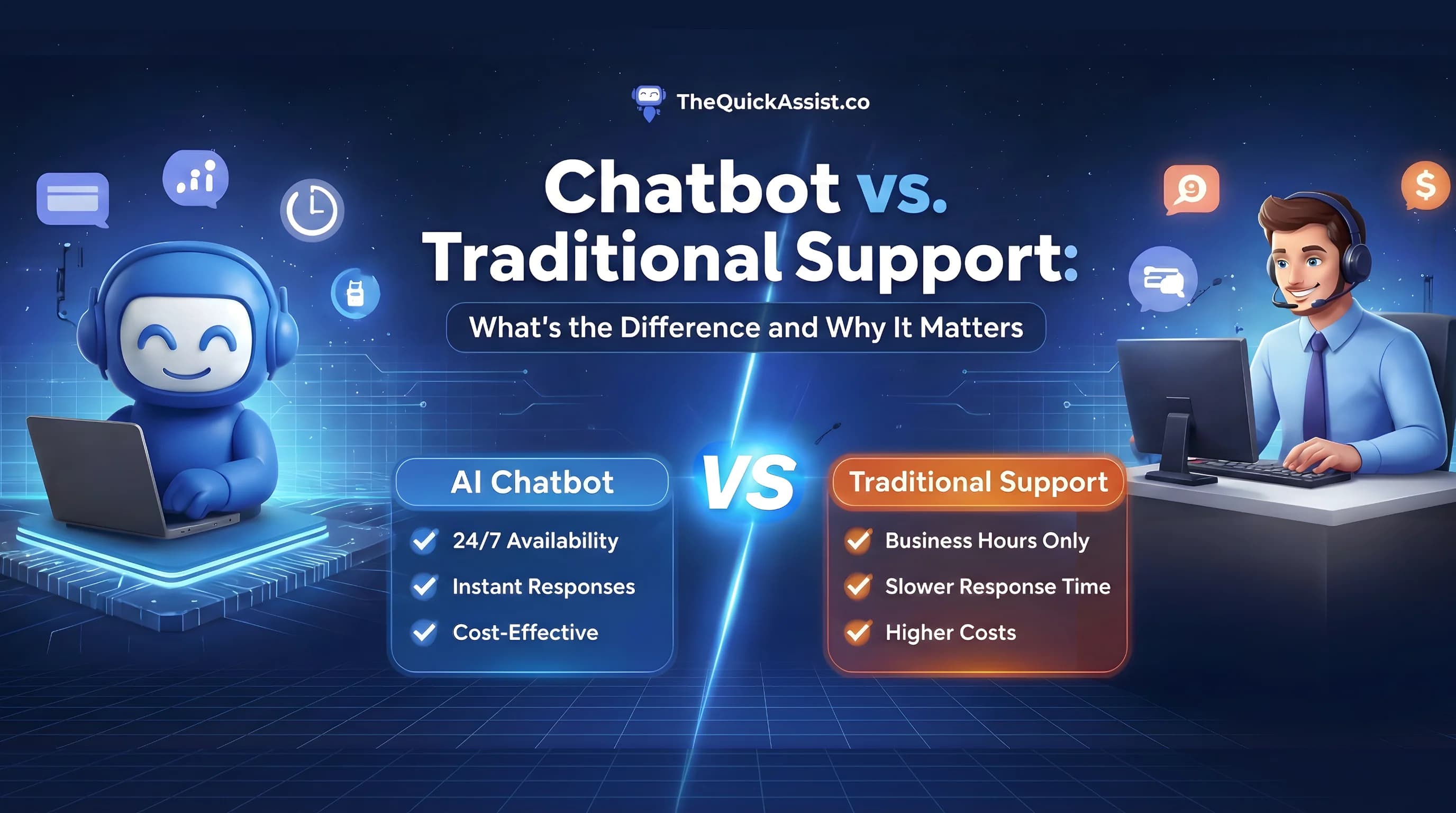
- Rising ticket volumes overwhelm human teams, especially during peak hours, product launches, or seasonal spikes.
- Slower response times frustrate customers when they expect fast, real-time help.
- Repetitive questions consume most of the team’s time, leaving little room for complex or relationship-driven conversations.
This isn’t a failure of your team—it’s a scalability problem. Traditional, fully manual support simply doesn’t grow at the same pace as modern customer expectations.
These challenges are often the first signs that your current support setup won’t scale much further without change.
Clear Signs It’s Time to Consider AI
AI isn’t a trend decision. It’s a signal-based decision.
You may be ready for AI support if:
- Your first response time or resolution rate has stopped improving, even with added effort.
- CSAT scores dip despite your team working harder or longer hours.
- Your support setup feels reactive, only responding after customers complain instead of guiding them proactively.
- Your team spends most of their day answering the same questions again and again.
If multiple signals apply, automation isn’t about replacing people—it’s about removing friction from the system.
What Good AI Customer Support Actually Delivers
Not all AI support is created equal.
When implemented properly, AI doesn’t replace human agents—it amplifies them.
Effective AI support delivers:
- Instant answers to common questions, 24/7, across time zones.
- Con!text-aware conversations that feel natural, not robotic or scripted.
- Smooth escalation to human agents when empathy, judgment, or complex problem-solving is required.
- Consistency, so customers get accurate answers every time.
The best AI support feels almost invisible to customers—but the impact on your support team is dramatic. Less burnout, fewer repetitive tasks, and more time spent where humans add the most value.
How QuickAssist Helps You Make the Shift
QuickAssist was built for businesses that want AI support without complexity or disruption.
Instead of forcing teams to change how they work, QuickAssist fits into existing workflows.
With QuickAssist, you get:
- No-code setup that lets you go live quickly—no engineering required.
- Seamless integrations with your existing website and support systems.
- Human-first automation, where AI handles repetitive queries, and humans focus on meaningful interactions.
- Multilingual support, so you can serve global customers without building global teams.
- Fast deployment, making it easy to test AI support without long-term risk.
QuickAssist doesn’t ask you to “go all-in” on AI. It lets you start small, validate results, and scale at your own pace.
Where to Go From Here
If you’re exploring AI for customer support, this blog is your starting point—not the final step.
The next move isn’t committing to a massive system overhaul. It’s understanding how AI fits into your support process and seeing it work in a real workflow.
You can explore how AI support functions in practice and evaluate whether it’s right for your team—without pressure or obligation.
Final Takeaway
AI isn’t about replacing people. It’s about scaling empathy, speed, and consistency as your business grows.
If your support team feels stretched or your customers expect faster, more accessible help, AI can be a practical solution—when implemented the right way.
QuickAssist helps businesses make that shift clearly, safely, and without unnecessary hype.
This is where AI stops being a buzzword—and starts becoming a real support advantage.