Blog
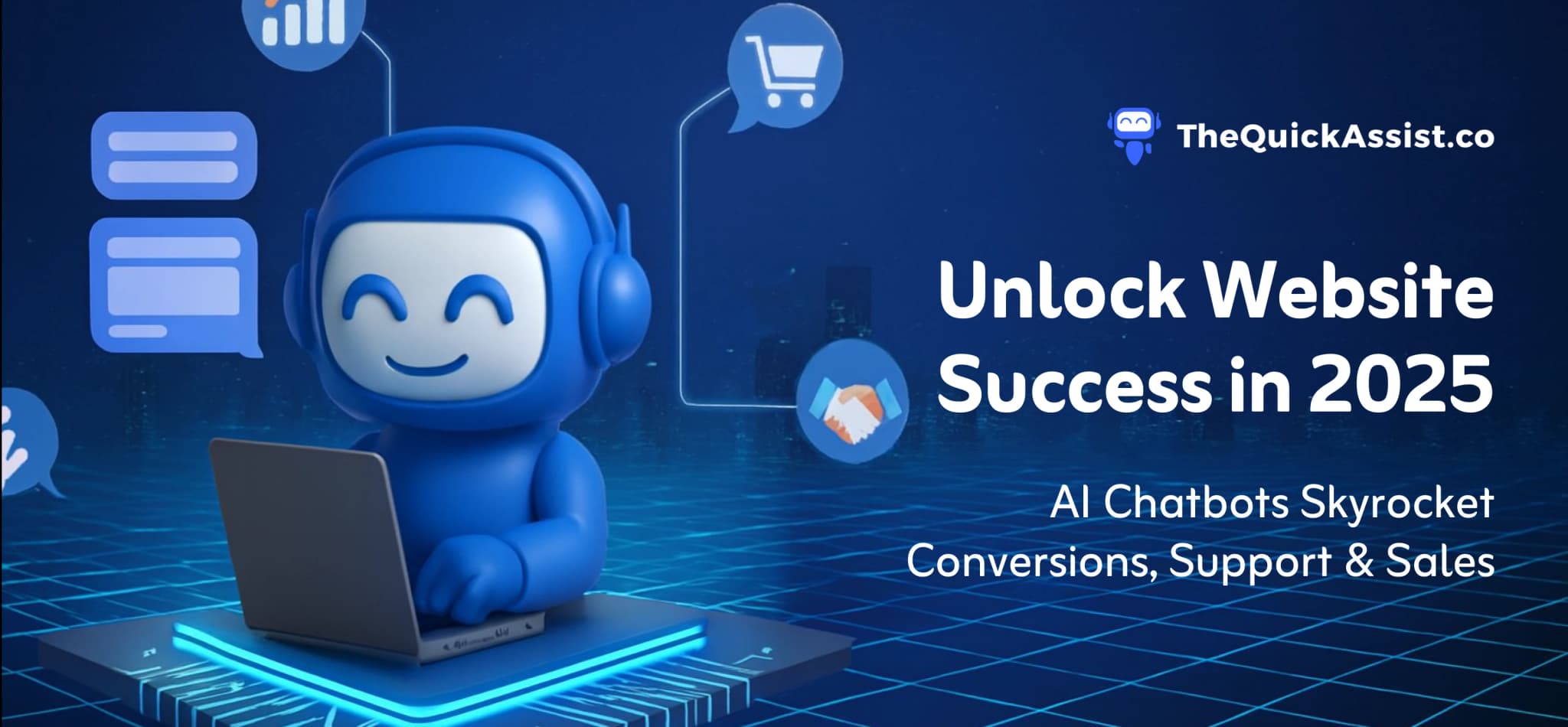
Unlock Website Success in 2025: How AI Chatbots Skyrocket Conversions, Support & Sales
Nov 25, 2025
Introduction: From Static Sites to Conversational Experiences
Why your website needs to talk, not just display
Today’s digital audience expects fast, interactive, and personalized guidance. Static pages, long forms, and slow email responses no longer match how people want to interact online.
- AI chatbots have shifted from add-ons to core business tools.
- They act as 24/7 sales assistants, support agents, and lead generators.
- Every visitor can get an interactive, guided experience from the first second.
What is an AI Website Chatbot?
A conversational layer on top of your website
An AI website chatbot sits directly on your site and guides visitors through everything they need to know.
- Answers visitor questions instantly.
- Guides users through content, sections, and product pages.
- Suggests relevant products or services.
- Collects and qualifies leads for your sales team.
- Books appointments, demos, or consultations.
- Automates repetitive support queries using NLP instead of rigid scripts.
Why AI Chatbots Are Essential in 2025
The ROI drivers behind chatbot adoption
- Lightning-fast responses reduce bounce rates and keep visitors engaged.
- 24/7 support ensures your business is always available.
- Automated handling of routine questions can cut support tickets by 60–70%.
- Bots gather and qualify customer details before handing them to sales.
- Personalized guidance increases trust and reduces buying friction.
How Website AI Chatbots Work
Combining AI models with your business knowledge
- Use advanced AI/LLM models (like GPT) as the brain.
- Connect to your website content, uploaded documents, FAQs, and guides.
- Apply custom instructions so the bot matches your brand voice.
- Answer questions around pricing, policies, features, and more—24/7.
Must-Have Features of Top Chatbots
What separates best-in-class website bots
- Multi-source training across web pages, PDFs, FAQs, SOPs, and KBs.
- Smooth human handoff when the bot reaches its limit.
- Automated lead forwarding to WhatsApp, email, or CRMs.
- Real-time analytics on questions, leads, and conversion performance.
- Effortless installation via copy-paste scripts so you can go live in minutes.
Automation Superpowers: What Chatbots Can Do On Your Site
Practical use cases across the whole customer journey
- Navigation: Direct visitors to key pages (e.g., pricing, features, FAQs).
- Product & service explanations with instant breakdowns and comparisons.
- Lead collection through conversational flows that replace static forms.
- Customer support for FAQs, returns, shipping, delivery, and policies.
- Personalized product recommendations based on needs.
- Knowledge base search across large document sets.
- Appointment booking with integrated calendars and reminders.
Industries Seeing the Biggest Impact
Where AI chatbots are already a competitive advantage
- Real estate and property.
- Healthcare, hospitals, and clinics.
- E-commerce and D2C brands.
- Education, coaching, and online programs.
- Agencies, services, and professional firms.
- SaaS and technology products.
- Finance, insurance, travel, and hospitality.
Why AI Chatbots Boost Conversions
A two-sided funnel before and after the lead is captured
- Pre-sale: Engage, answer questions, reduce objections, and capture leads.
- Post-lead: Instantly forward information to sales and trigger nurturing flows.
- Shorter sales cycles and more qualified conversations.
- Many companies see 2–3× higher conversion rates with smart chatbots.
How to Add an AI Chatbot to Your Website
Implementation in five straightforward steps
- Create your bot and choose its primary role (support, sales, lead gen).
- Train it with links, files, and detailed instructions.
- Customize the widget UI to match your branding.
- Embed it on your site using a lightweight script.
- Go live and refine based on analytics and conversations.
Conclusion: The Conversational Website Advantage
In 2025, websites without AI chatbots risk feeling dated and unresponsive. By turning your site into a conversation-driven, always-on experience, you create happier visitors, more qualified leads, and stronger revenue—powered by AI chatbots.
- Conversational websites outperform static sites across engagement and conversion.
- AI chatbots make support and sales scalable without sacrificing personalization.
- Upgrading to an AI-powered experience is becoming the default, not the exception.