How to Automate Lead Generation with WhatsApp: A Complete Business Guide (2026)
Generating high-quality leads consistently is one of the biggest challenges for modern businesses. Customers today expect immediate responses, personalized communication, and seamless interactions before making a purchase decision. Delayed replies or manual lead management often result in missed opportunities and lower conversion rates.
This is where WhatsApp automation becomes a valuable business tool.
With billions of users worldwide, WhatsApp has become a preferred communication channel for customers. When combined with automation, CRM systems, and AI Agent chatbots, businesses can capture, qualify, nurture, and manage leads more efficiently while maintaining a personalized customer experience.
In this guide, you'll learn how to automate lead generation with WhatsApp, explore practical workflows, discover essential tools, and understand the best practices for creating scalable, customer-friendly lead generation systems.
Quick Answer
Automating lead generation with WhatsApp involves using the WhatsApp Business Platform, automation tools, AI chatbots, and CRM integration to capture inquiries, qualify prospects, send personalized follow-ups, assign leads to sales teams, and track conversions automatically.
Rather than replacing human sales conversations, automation helps businesses respond faster and manage repetitive tasks more efficiently.
What Is WhatsApp Lead Generation?
WhatsApp lead generation is the process of attracting potential customers and encouraging them to start a conversation with your business through WhatsApp.
Businesses commonly generate leads through:
- Website "Chat on WhatsApp" buttons
- QR codes
- Social media advertisements
- Landing pages
- Click-to-WhatsApp ads
- Email campaigns
- Product catalogs
- Digital brochures
- Customer referrals
Once a conversation begins, automation can help organize and nurture the lead.
Why Automate Lead Generation?
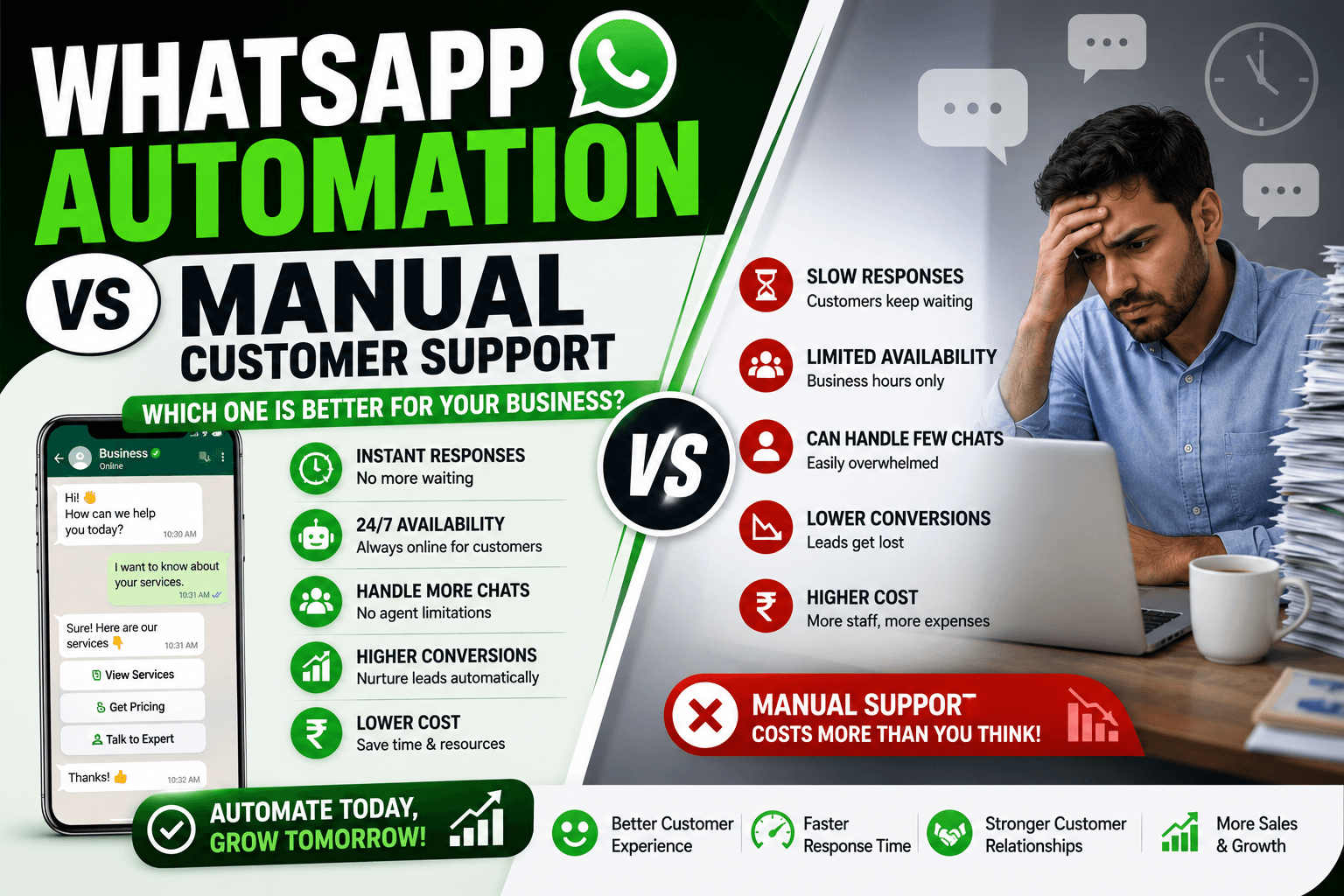
Manual lead management becomes increasingly difficult as inquiry volumes grow.
Automation helps businesses:
- Respond instantly
- Reduce missed opportunities
- Improve customer experience
- Qualify leads faster
- Increase sales efficiency
- Maintain consistent communication
- Scale operations without proportional increases in manual workload
How WhatsApp Lead Automation Works
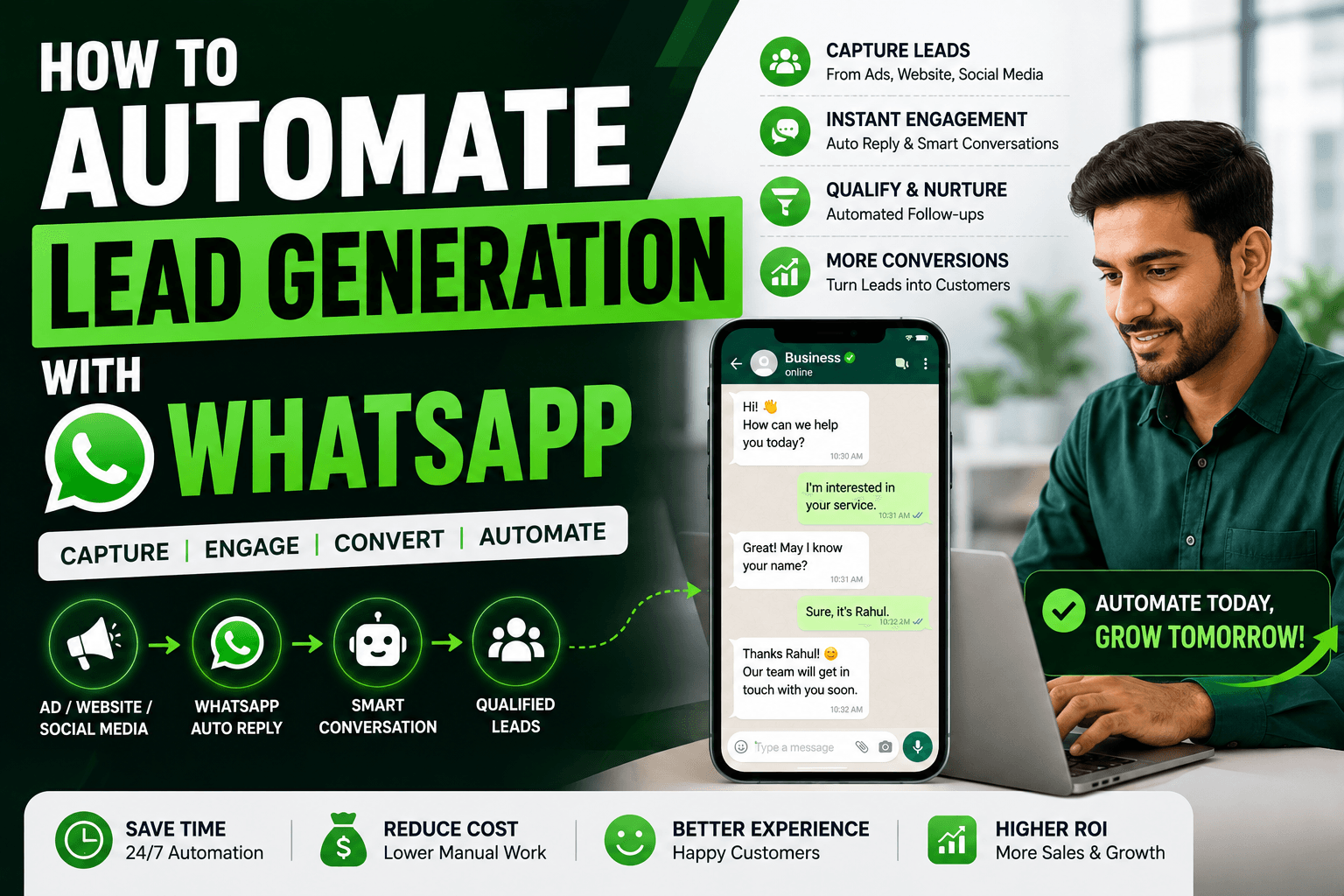
A typical automated workflow looks like this:
- A visitor clicks a WhatsApp button or advertisement.
- An automated greeting welcomes the customer.
- The chatbot asks qualifying questions.
- Customer information is stored in the CRM.
- The lead is categorized based on predefined criteria.
- A sales representative is notified if human assistance is needed.
- Automated follow-up messages continue until the customer takes the next step or opts out.
This structured approach helps businesses manage conversations while preserving a human touch when required.
Step 1: Create a WhatsApp Business Profile
A professional profile builds credibility and trust.
Include:
- Business name
- Logo
- Description
- Business hours
- Website
- Email address
- Product catalog (if applicable)
A complete profile reassures potential customers that they are communicating with a legitimate business.
Step 2: Add WhatsApp Entry Points
Make it easy for prospects to contact you.
Popular entry points include:
- Website chat buttons
- Click-to-WhatsApp advertisements
- QR codes on marketing materials
- Email signatures
- Social media profiles
- Google Business Profile
- Digital business cards
Reducing friction encourages more conversations.
Step 3: Use AI Chatbots for Initial Conversations
AI chatbots can answer common questions and collect information before a sales representative joins the conversation.
Typical questions include:
- Name
- Company
- Location
- Product interest
- Budget range
- Preferred contact time
This saves time for both customers and sales teams.
Step 4: Qualify Leads Automatically
Not every inquiry is ready to buy.
Lead qualification helps identify the most promising opportunities.
Businesses may categorize leads based on:
- Business size
- Industry
- Product requirements
- Purchase intent
- Timeline
- Geographic region
Qualified leads can then be routed to the appropriate sales representative.
Step 5: Integrate WhatsApp with Your CRM
Connecting WhatsApp with a CRM centralizes customer information.
CRM integration allows businesses to:
- Store contact details
- Record conversation history
- Track sales stages
- Schedule follow-ups
- Assign leads automatically
- Monitor conversions
This improves collaboration between marketing and sales teams.
Step 6: Automate Follow-Up Messages
Many prospects need multiple touchpoints before making a decision.
Examples of automated follow-ups include:
- Product information
- Demo invitations
- Appointment reminders
- Case studies
- Educational resources
- Pricing information
- Limited-time offers
Messages should be relevant, timely, and sent only with customer consent.
Step 7: Personalize Every Interaction
Automation does not have to feel robotic.
Personalization can include:
- Customer names
- Product interests
- Recent inquiries
- Previous purchases
- Location-based information
- Relevant recommendations
Personalized communication often leads to higher engagement than generic broadcasts.
Step 8: Monitor Performance Metrics
Measure the effectiveness of your lead generation strategy using metrics such as:
- Number of conversations
- Lead capture rate
- Qualified leads
- Response time
- Conversion rate
- Cost per lead
- Sales pipeline progression
- Customer satisfaction
Continuous analysis helps identify opportunities for improvement.
AI-Powered Lead Generation
Modern AI tools can further improve WhatsApp automation by helping businesses:
- Understand customer intent
- Recommend relevant products
- Route conversations intelligently
- Predict lead quality
- Identify frequently asked questions
- Suggest follow-up timing
- Summarize conversations for sales teams
AI should support-not replace-human judgment in important customer interactions.
Industries That Benefit from WhatsApp Lead Automation
Many industries use WhatsApp to streamline lead generation, including:
- E-commerce
- Real estate
- Education
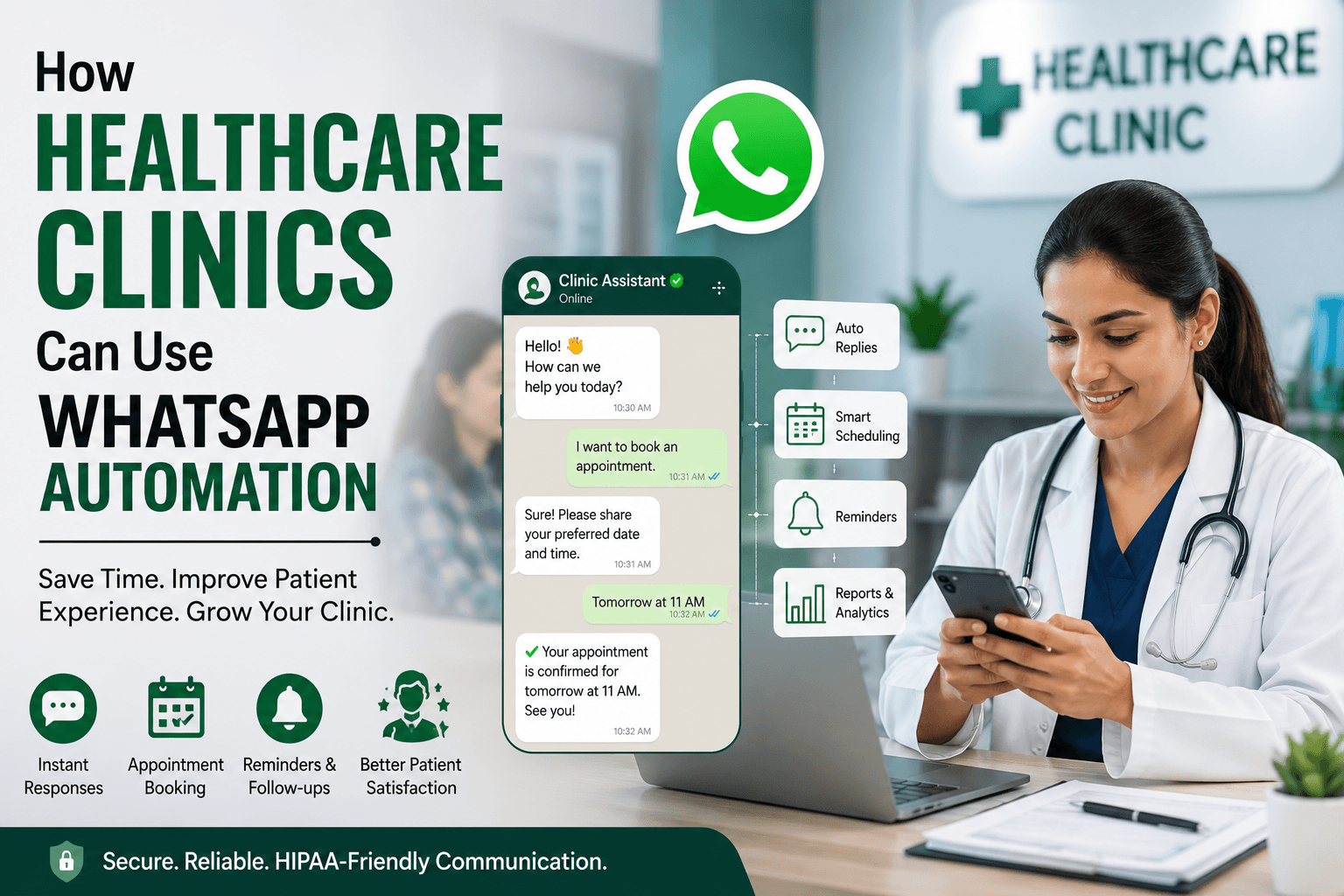
- Healthcare
- Financial services
- Insurance
- Travel
- Hospitality
- Automotive
- Professional services
- SaaS companies
Any organization that receives regular customer inquiries can benefit from structured automation.
Best Practices for WhatsApp Lead Generation
To build trust and improve results:
- Obtain customer consent before sending marketing messages.
- Respond promptly to inquiries.
- Keep messages clear and concise.
- Offer easy access to a human representative.
- Regularly update chatbot knowledge.
- Segment leads based on customer needs.
- Review campaign performance and refine workflows.
Responsible automation supports better customer relationships.
Common Mistakes to Avoid
Businesses should avoid:
- Sending unsolicited promotional messages.
- Asking too many questions at once.
- Delaying human intervention for complex issues.
- Ignoring CRM updates.
- Using generic follow-up messages for every lead.
- Failing to analyze campaign performance.
- Neglecting privacy and data protection requirements.
Balancing efficiency with customer experience is essential.
Frequently Asked Questions
What is WhatsApp lead generation?
WhatsApp lead generation is the process of attracting potential customers to initiate conversations through WhatsApp and guiding them toward becoming qualified sales opportunities.
Can WhatsApp automate lead generation?
Yes. Businesses can automate parts of the lead generation process using the WhatsApp Business Platform, AI chatbots, CRM integrations, and workflow automation tools. Human oversight remains important for complex or high-value interactions.
Is WhatsApp automation suitable for small businesses?
Yes. Small businesses can begin with basic automation features available through the WhatsApp Business App, while larger organizations often adopt more advanced integrations as their customer volume grows.
Does WhatsApp automation improve conversion rates?
Automation can improve response speed, lead organization, and follow-up consistency, all of which may contribute to better conversion rates when combined with effective sales processes and personalized communication.
Which industries benefit most from WhatsApp lead automation?
Industries such as retail, education, healthcare, real estate, financial services, travel, hospitality, and professional services commonly use WhatsApp to manage customer inquiries and support lead generation.
Final Thoughts
Automating lead generation with WhatsApp enables businesses to respond more quickly, organize customer inquiries efficiently, and provide consistent communication throughout the buying journey. By combining the WhatsApp Business Platform, AI-powered chatbots, CRM integration, and thoughtful automation workflows, organizations can improve operational efficiency while delivering a better customer experience.
Successful automation is not about removing the human element, it is about allowing technology to handle repetitive tasks so sales and support teams can focus on meaningful conversations and relationship building. Businesses that prioritize customer consent, personalization, data privacy, and continuous optimization are better positioned to create scalable lead generation systems that support sustainable business growth.